Observe
Road cameras and connected surveillance systems capture events. Detection coverage depends on camera placement, configuration, connectivity and the commissioned equipment.


HAJARAIHSAN / INTELLIGENT TRAFFIC MANAGEMENT
Connecting road surveillance, evidence review and traffic administration in one operational picture.
Explore our ITMS softwareFROM ROAD EVENTS TO INFORMED ACTION
Traffic management works best when cameras, communications, software and people operate together. HajaraIhsan’s Intelligent Traffic Management Systems approach brings road events into a shared workspace, helping authorised teams find evidence, review potential offences and maintain a traceable record of their decisions.
The purpose is safer movement and consistent administration. Financial accountability follows from properly reviewed cases, approved charges and reconciled payments—not from treating every camera detection as a payable fine.
HOW IT WORKS
Road cameras and connected surveillance systems capture events. Detection coverage depends on camera placement, configuration, connectivity and the commissioned equipment.
HikCentral integration brings event records into the ITMS workspace. Operators can search by date and vehicle plate, then review the available checkpoint, lane, speed and evidence information.
An authorised reviewer checks the evidence, context and record quality. Duplicate, unclear or inapplicable detections must not simply become collectible charges.
The tariff module maps offence codes to configured amounts. New codes enter as inactive with a zero amount until an administrator approves the applicable tariff.
A complete service needs valid notices, an opportunity to contest a case and approved payment and court connections. Some citizen-facing integrations remain pending in the current MVP.
Compare detections, assessments, adjustments, successful payments and outstanding balances. Use the resulting evidence to improve road operations and measure compliance over time.
OUR ITMS SOFTWARE
The Enugu interface connects to HikCentral OpenAPI and separates operational activity from financial outcomes. These are actual software screenshots captured on 17 September 2026.
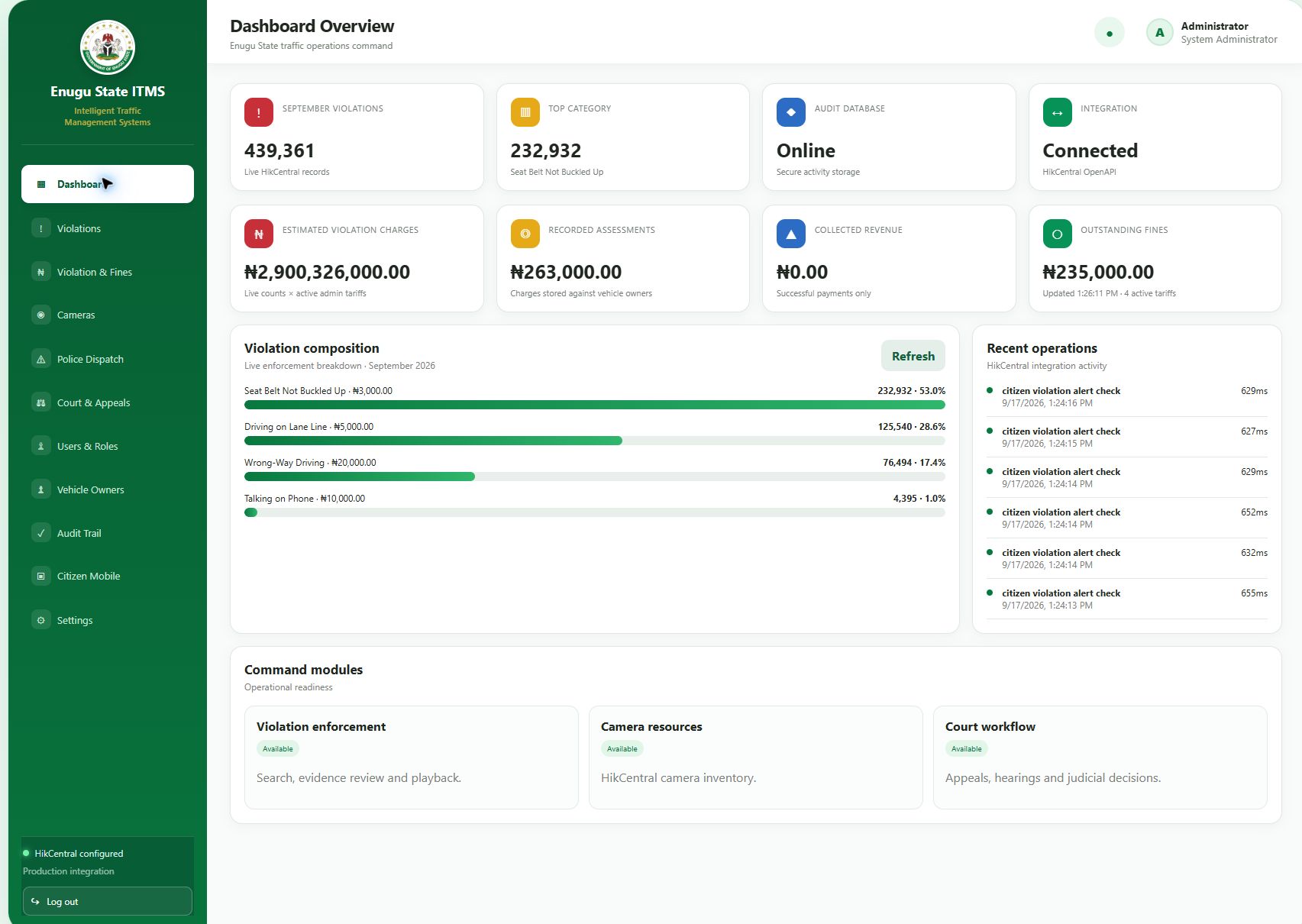
The violation search accepts a date range and an optional plate number. Its results table is organised around time, plate, violation, checkpoint, lane, speed and review. The interface recommends searches of 20 days or less for reliable HikCentral results.
The navigation also provides camera resources, police dispatch, court and appeals, vehicle owners, users and roles, and an audit trail. Menu availability alone does not establish that every external agency integration is operational.
Estimated charges multiply detected events by active configured tariffs. Recorded assessments are charges stored against vehicle-owner records. Collected revenue counts successful payments recorded in the application. Outstanding fines represent its remaining recorded balance.
These measures answer different questions. A high detection total demonstrates monitoring activity; it does not establish liability, payment or treasury receipts.
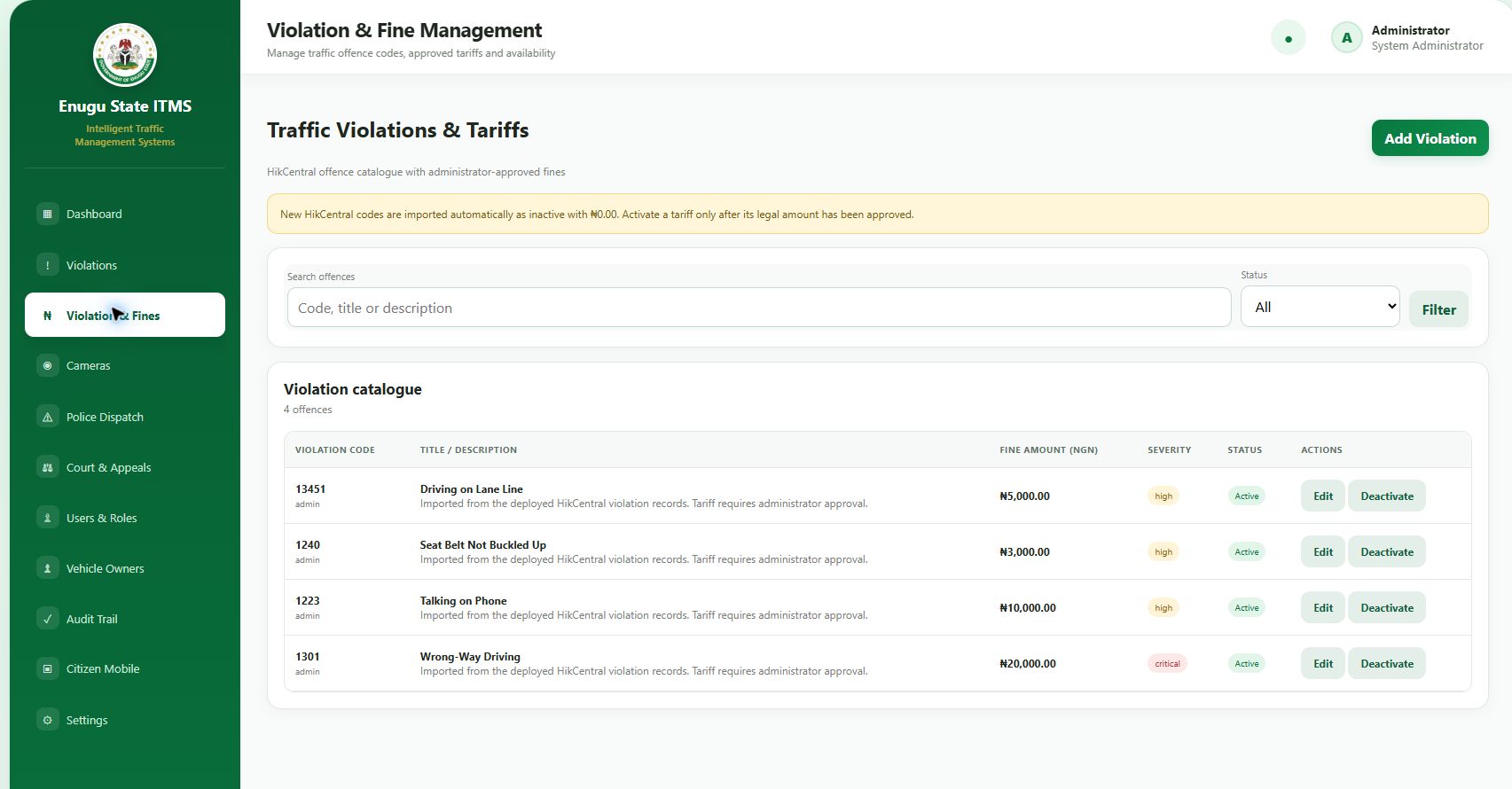
The displayed tariff amounts describe the application configuration. They are not presented here as independently verified statutory fines. Tariffs, notices and enforcement procedures require the appropriate authority’s approval.
THE CITIZEN EXPERIENCE
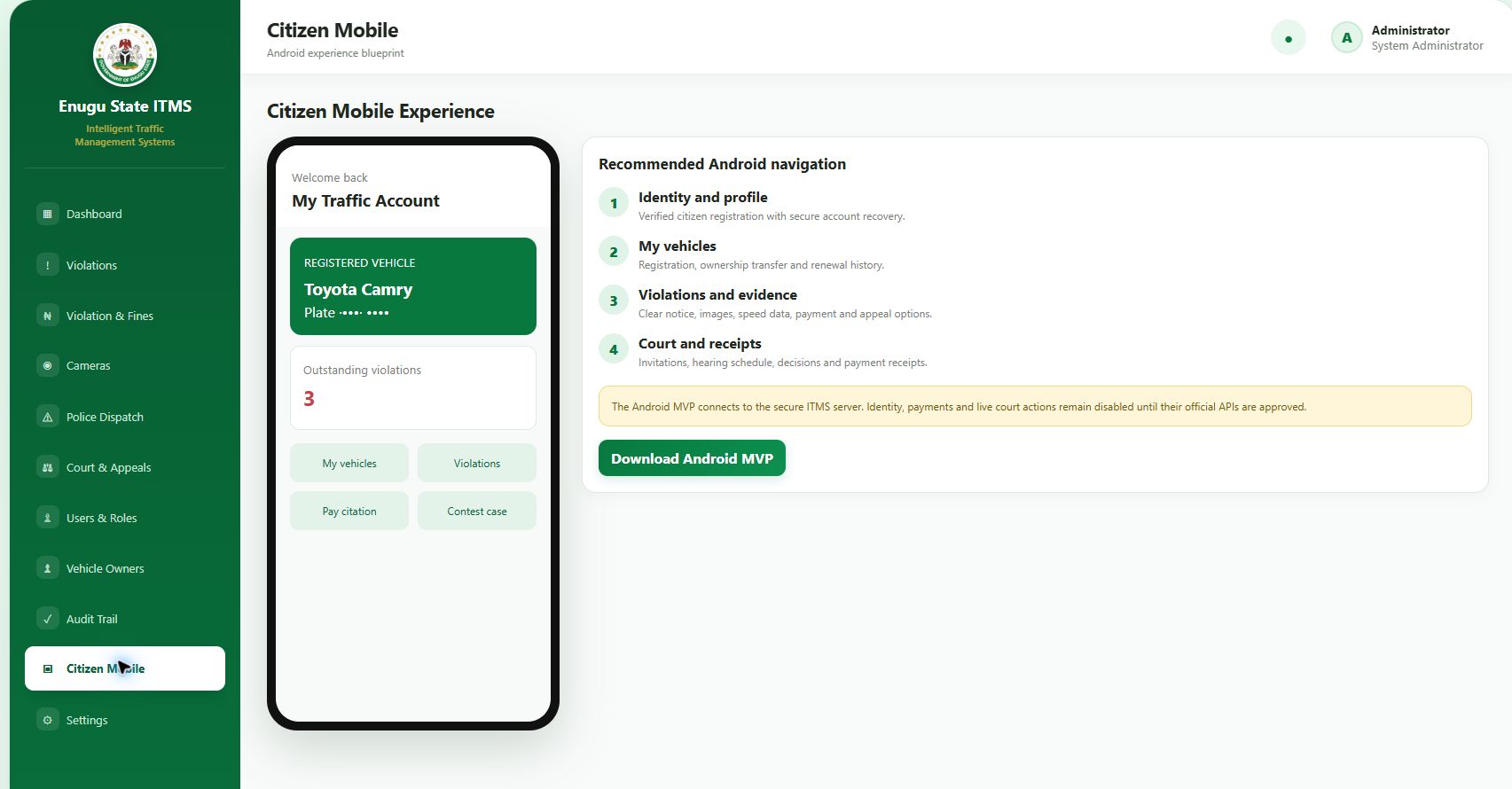
The citizen experience is designed around a traffic account: registered vehicles, violation notices, evidence, payment options, case contests and receipts.
Current status: Android MVP / experience blueprint. The software explicitly states that identity, payments and live court actions remain disabled until their official APIs are approved. These are integration milestones, not completed payment or judicial services.
A responsible rollout should pair clear notices with evidence access, support and a documented appeal process. Access controls, appropriate retention and protection of vehicle-owner information belong in the operational design.
ENUGU / PROJECT AND SOFTWARE INSIGHTS
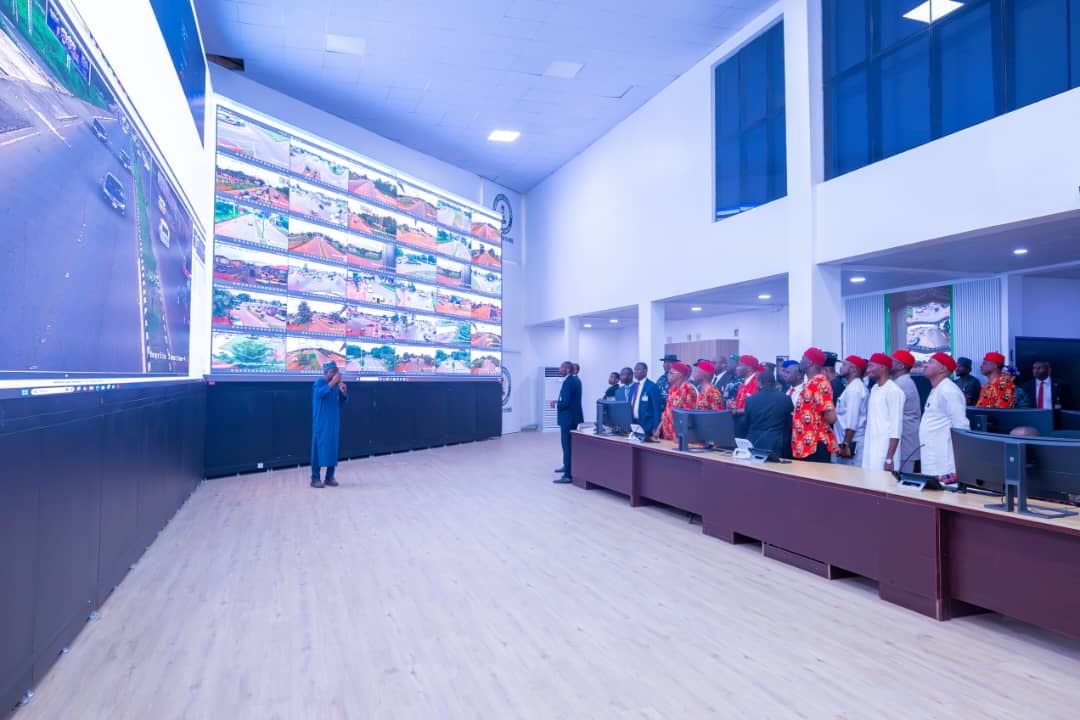
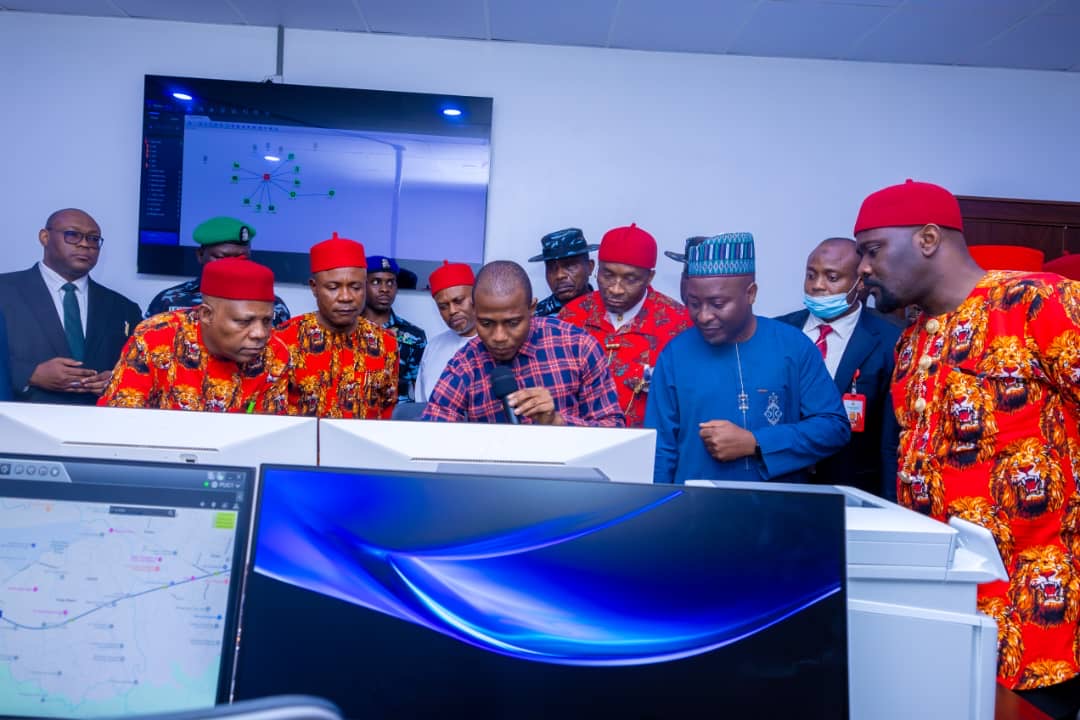
The project photographs show the physical control-room environment. The software screenshot provides a separate operational snapshot; photographs alone do not establish detection accuracy, collection performance or road-safety outcomes.
Snapshot: 17 September 2026, 13:26 Lagos time. Dashboard period label: September 2026. This is an incomplete-month snapshot, not an audited monthly statement. Live totals change. Outstanding fines displayed: ₦235,000.
| Category | Events | Configured tariff | Estimated charges |
|---|---|---|---|
| Seat belt not buckled | 232,932 | ₦3,000 | ₦698,796,000 |
| Driving on lane line | 125,540 | ₦5,000 | ₦627,700,000 |
| Wrong-way driving | 76,494 | ₦20,000 | ₦1,529,880,000 |
| Talking on phone | 4,395 | ₦10,000 | ₦43,950,000 |
| Total | 439,361 | — | ₦2,900,326,000 |
Seat-belt events account for approximately 53% of displayed records, followed by lane-line events at 28.6%. These are useful starting points for evidence sampling, driver education and targeted operational review. They do not measure the number of unique drivers or establish a change in crash rates.
The system records ₦0 in successful payments at this snapshot. Consequently, it does not support a claim that Enugu is currently collecting billions per month through this application. The ₦28,000 difference between assessments and outstanding fines also needs reconciliation; it must not be assumed to be a payment.
These application figures do not establish total Enugu State revenue or receipts recorded in other systems.
PLANNING WITH TRANSPARENT ASSUMPTIONS
A defensible monthly collection forecast needs completed-month payment records, assessment conversion, payment delays, reversals and reconciliation. The current snapshot is insufficient for a reliable forecast. The calculator below is an illustrative scenario—not a prediction or a revenue commitment.
Assumes a future month has the same estimated charge value as this snapshot, the same tariff mix and the selected assessment and payment rates. Default percentages are illustrative assumptions, not measured conversion rates. No daily extrapolation or seasonal adjustment is applied. Costs, refunds and revenue-sharing arrangements are excluded. Better compliance may reduce future violations and fine income.
Reconcile monthly assessments and payment receipts with the authorised collection account; remove duplicates and cancelled cases; measure the time from notice to payment; and compare several completed months. Report monitoring coverage, evidence quality, appeals and safety outcomes alongside financial performance.
BUILD THE RIGHT OPERATIONAL SYSTEM
Talk to HajaraIhsan about camera coverage, command-centre integration, software workflows and the approvals needed for your deployment.
Discuss an ITMS project Explore our project gallerySources: company-supplied ITMS article and project photographs; authorised review of the Enugu ITMS interface on 17 September 2026. Screenshots are dated illustrations, not a live feed. Company-provided project information does not imply endorsement by people or institutions pictured.